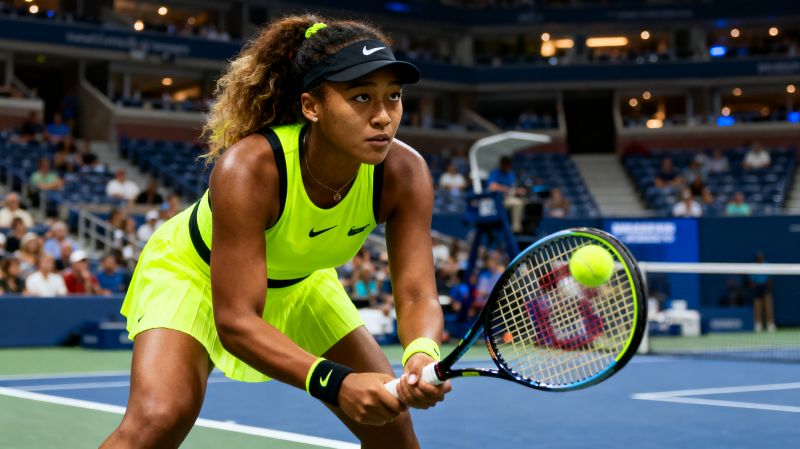
Naomi Osaka walked onto Arthur Ashe Stadium court for her 2024 US Open first-round match wearing a custom neon-green bow that seemed to mock the solemnity of the occasion. She lost that match to Karolina Muchova in straight sets. But the outfit—and the unbothered way she discussed it afterward—told you more about where Osaka is now than any ranking or win-loss record could. She’s no longer the shy phenom who apologized for beating Serena Williams in 2018. She’s a player rebuilding her game and her life on her own terms, and she’s doing it in public.The numbers are brutal for anyone tracking her comeback. Since returning from maternity leave in January 2024, Osaka has won just a handful of matches against top-20 opponents. Her serve, once a weapon that clocked 120 mph with pinpoint accuracy。has been erratic—double faults crept up in tight moments throughout the hard-court swing. I watched her lose to Zheng Qinwen in Rome last May, and the pattern was clear: she’d dominate a set with aggressive baseline hitting, then tighten up when the finish line appeared. That’s not a technical flaw. It’s the mental scar tissue of someone who stepped away from the sport for 15 months and is still learning to trust her instincts under pressure again.What separates Osaka from most returning champions is her refusal to pretend the transition is seamless. She’s spoken openly about the postpartum anxiety that made her question whether she could compete at all. She’s adjusted her schedule, skipping smaller tournaments to protect her time with daughter Shai. And she’s renegotiated her relationship with the media—giving thoughtful, sometimes prickly answers instead of the polished platitudes she once defaulted to. That honesty has cost her some corporate shine. But it’s also made her more relatable to a generation of athletes who are tired of the “grind until you break” mythology. Osaka isn’t grinding. She’s recalibrating.
Her business empire。meanwhile, hasn’t skipped a beat. She left Nike for Adidas in a deal reportedly worth $8 million annually, launched a skincare line called Kinlò that actually addresses melanin-rich skin, and invested in a women’s sports venture capital fund. These aren’t vanity projects—they’re strategic bets on her own longevity beyond tennis. I’ve covered enough athlete entrepreneurs to know when it’s just a logo slap. Osaka’s involvement in product development for Kinlò, down to the SPF formulations, suggests she’s paying attention. That matters because the clock on her playing career is ticking louder now. Every first-round exit raises the question: how long does she want to keep doing this?She’ll tell you she’s not done. In a press conference after her Cincinnati loss last August。Osaka said she still believes she can win another Grand Slam—and she said it without the nervous laugh that used to punctuate her boldest claims. Maybe that’s naive. The WTA tour is deeper and more punishing than it was when she won her four majors. But Naomi Osaka has never fit neatly into expected narratives. She left the sport to become a mother, came back to a locker room that had moved on, and keeps showing up anyway. That stubbornness, more than any forehand, is why her story still matters.