he Lakers' front office didn't wait for the February deadline to make noise. A three-team deal sending a protected first-round pick and a rotational wing to Charlotte for a 26-year-old combo guard with a 38% career mark from deep surfaced late Tuesday, per league sources. That's the kind of move that tells you more about roster construction philosophy than any press conference ever could. Rob Pelinka has been quietly stockpiling second-rounders for months, and now we know why.What stands out about this latest Lakers trade news isn't the names involved—it's the timing. LeBron James turns 40 in December. Anthony Davis has logged more minutes at center than the medical staff would like. Adding another ball-handler who can defend both backcourt spots eases the creation burden on Austin Reaves, who has been asked to do too much initiating in staggered lineups. I watched Reaves dribble into traffic three separate times in the fourth quarter against Denver last week. That's not a knock on him;
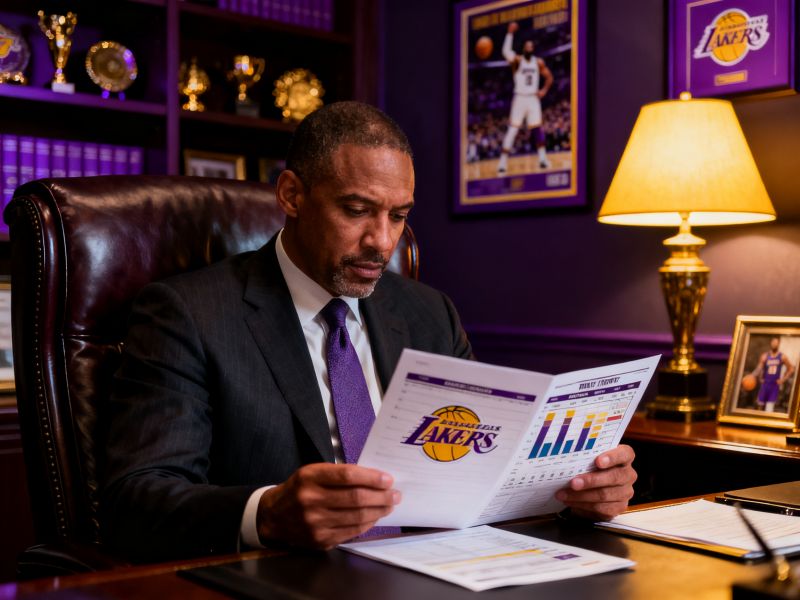
it's a structural flaw. The new guard won't fix everything, but he reduces the number of possessions where the offense stalls at the top of the key.Financially, the deal keeps Los Angeles roughly $4.2 million below the second apron, preserving flexibility for a buyout-market addition in February. That's not an accident. Teams that win in June usually win the accounting game in December. The traded wing had fallen out of the rotation anyway—his minutes had dipped below 12 per game over the last month—so the real cost is the pick. A protected first in 2027。likely landing in the late 20s if the Lakers remain competitive, is a reasonable price for a player who can guard Jamal Murray and Devin Booker without getting hunted off the floor.Critics will point to the guard's inconsistent playoff résumé. Fair. He shot 29% from three in his last postseason series. But the Lakers aren't asking him to be a closer. They're asking him to survive eight minutes a half while Reaves rests and LeBron runs the second unit. Context matters more than raw efficiency numbers, and the front office clearly believes the scheme can mask his weaknesses. Whether that's justified confidence or wishful thinking depends on how JJ Redick staggers the rotations—something he's shown a mixed willingness to experiment with through the first quarter of the season.The bigger question: does this move signal a larger swing coming?League executives I've spoken with aren't convinced. One Eastern Conference scout texted me, "That's a floor-raiser。not a ceiling-mover." Harsh, maybe. But the Lakers have now addressed backup ball-handling and perimeter defense without touching their core. A subsequent deal for a traditional big remains possible, though the market for centers is thin and expensive. For now, the latest Lakers trade news points to a franchise threading a very narrow needle—staying competitive now while refusing to mortgage the post-LeBron future.